

Ever wondered about the tiny openings on your face and what role they play in your skin’s health and appearance? While often used interchangeably, pores and hair follicles have distinct functions and structures, understanding a pore vs hair follicle on face is key to addressing common skin concerns. At Radzs Hair Studio Cyberjaya, we believe that informed skincare leads to healthier, more radiant results. This guide will clarify the differences and help you appreciate the intricate workings of your skin.
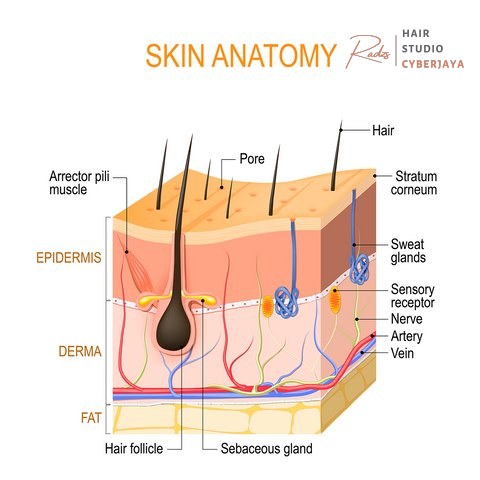
Defining a pore and its purpose
Pores are the small openings on the surface of your skin, essential for its overall health and function. There are two primary types of pores: sweat pores and sebaceous pores. Sweat pores are tiny conduits that release sweat, helping to regulate body temperature. These are incredibly small and are found all over the body, including the face.
Sebaceous pores, often what people refer to simply as “pores,” are openings to a canal called a follicle. These follicles contain a hair and an oil gland, known as the sebaceous gland. The sebaceous gland produces sebum, a natural oil that lubricates and protects the skin and hair. Pores ensure that sebum and sweat can reach the skin’s surface, keeping it moisturized and protected from external elements.

While all sebaceous pores are associated with a hair follicle, not all pores have visible hair growing out of them, especially on the face. Their size can vary depending on genetics, skin type, and age. Enlarged pores are a common concern for many, often appearing more prominent in individuals with oily skin due to increased sebum production.
The role of pores in skin health
Pores are vital for maintaining the skin’s barrier function. They allow sebum to travel from the sebaceous glands to the skin’s surface, creating a protective layer that locks in moisture and keeps out harmful bacteria and environmental pollutants. Without functional pores, our skin would become dry, cracked, and much more susceptible to infection.
Additionally, pores are crucial for detoxification. They facilitate the release of sweat, which not only helps regulate body temperature but also carries away waste products from the body. Healthy, clear pores are a sign of well-functioning skin, indicating proper oil balance and efficient waste removal. Issues like clogged pores can lead to various skin problems.

Understanding a hair follicle’s structure
A hair follicle is a complex, tube-like structure located in the dermis layer of the skin. It’s essentially an organ that anchors each hair into the skin and nourishes it. Each follicle contains several important components: the hair shaft, sebaceous gland, arrector pili muscle, and nerve endings. The hair shaft is the visible part of the hair that extends above the skin’s surface.
The sebaceous gland, as mentioned, is responsible for producing sebum, which lubricates the hair and skin. The arrector pili muscle, a tiny muscle attached to the follicle, contracts to make the hair stand on end, a phenomenon commonly known as goosebumps. Nerve endings around the follicle make it sensitive to touch, providing sensory information.

Hair follicles are responsible for hair growth, a continuous cycle involving growth, resting, and shedding phases. The health of your hair follicle directly impacts the quality and strength of your hair. When follicles become damaged or dysfunctional, it can lead to hair thinning, loss, or even various skin conditions like folliculitis or acne. Proper care of the scalp and facial hair follicles is essential for robust hair growth and clear skin.
The lifecycle and function of hair follicles
Hair follicles are remarkable mini-organs that undergo a cyclical process of growth and rest. Each follicle has its own independent cycle, which is why we don’t shed all our hair at once. The anagen phase is the active growth period, where hair cells rapidly divide and the hair shaft lengthens. This phase can last from two to seven years, depending on the body part.
Following the anagen phase, the hair enters the catagen phase, a short transitional period where hair growth stops and the follicle shrinks. Finally, the telogen phase is a resting period, after which the old hair sheds and a new anagen phase begins. This continuous cycle ensures that we always have a healthy supply of hair, protecting our skin and adding to our appearance. Disruptions to this cycle can indicate underlying health issues or stress.

Key differences between a pore and hair follicle on face
While closely related, it’s crucial to differentiate between a pore and a hair follicle, especially when discussing facial skin. Essentially, a pore is the external opening on the skin’s surface, while the hair follicle is the internal structure beneath the skin that contains the hair and sebaceous gland. All sebaceous pores are openings to hair follicles, but not all hair follicles produce visible hair on the face.
Think of it this way: the pore is the doorway, and the hair follicle is the room behind it. The doorway allows things to enter and exit the room. Therefore, when you see an enlarged pore, you are seeing the opening of a follicle that may or may not have a prominent hair shaft. Understanding this distinction is vital for proper skincare and identifying specific conditions.

The primary function of a pore is to facilitate the release of sweat and sebum, ensuring the skin remains hydrated and protected. On the other hand, the hair follicle’s main function is to produce hair, which provides insulation and protection. While both are integral to skin health, their specific roles and underlying structures are quite different.
Functional and structural comparisons
To further clarify the distinction of a pore vs hair follicle on face, let’s look at their structural and functional differences in a table:
| Feature | Pore | Hair Follicle |
|---|---|---|
| Definition | Visible opening on the skin surface | Tube-like structure beneath the skin that encases a hair and sebaceous gland |
| Primary Function | Release sweat and sebum; pathway for hair to emerge | Produce and grow hair; house sebaceous glands |
| Location | Surface of the epidermis | Extends deep into the dermis |
| Components | Opening to a duct or follicle | Hair shaft, sebaceous gland, arrector pili muscle, nerve endings |
| Visibility | Often visible, especially when enlarged or clogged | Not visible externally (except for the hair shaft emerging) |
This table clearly illustrates that while pores are the external gateway, hair follicles are the internal machinery driving hair growth and sebum production. Understanding these nuances helps in selecting appropriate skincare treatments for concerns such as enlarged pores or blocked follicles, ensuring targeted and effective solutions for a radiant complexion.

Common problems affecting pores and hair follicles on the face
Both pores and hair follicles on the face are susceptible to various issues that can impact skin health and appearance. One of the most common problems is clogging. When pores become blocked with excess sebum, dead skin cells, and debris, they can lead to the formation of blackheads and whiteheads. This blockage creates an ideal environment for bacteria, leading to inflammation and acne breakouts.
Enlarged pores are another frequent concern. While pore size is largely determined by genetics, factors like excessive oil production, sun damage, and loss of skin elasticity can make pores appear larger. Similarly, hair follicles can become inflamed, leading to conditions like folliculitis, which presents as small, red bumps or pustules, often mistaken for acne. These issues highlight the importance of understanding a pore vs hair follicle on face for effective treatment.

Addressing clogged pores and folliculitis
Managing clogged pores and folliculitis requires a targeted approach. For clogged pores, regular cleansing with salicylic acid or benzoyl peroxide can help exfoliate the skin and reduce sebum production. Chemical peels and retinoids are also effective in promoting cell turnover and preventing blockages. At Radzs Hair Studio Cyberjaya, we emphasize personalized skincare routines tailored to your specific skin concerns.
Folliculitis, an inflammation of the hair follicles, often requires antibacterial or antifungal treatments, depending on the cause. Gentle exfoliation can help prevent ingrown hairs, which sometimes trigger folliculitis. Avoiding tight clothing and practicing good hygiene can also minimize flare-ups. Consulting with a skincare professional is crucial for accurate diagnosis and effective treatment plans for both conditions.

Skincare strategies for healthy pores and follicles
Maintaining healthy pores and hair follicles on your face is fundamental for clear, smooth skin. A consistent and appropriate skincare routine can significantly improve their condition. This involves regular cleansing to remove dirt, oil, and makeup, followed by toning to balance skin pH and minimize the appearance of pores. Hydration is also key; even oily skin needs moisture to prevent it from overcompensating with excess sebum production.
Exfoliation, whether physical or chemical, plays a crucial role in preventing clogged pores by removing dead skin cells. However, it’s important not to over-exfoliate, as this can irritate the skin and exacerbate issues. Always choose products suited for your skin type and concerns. For specific problems like acne or enlarged pores, incorporating targeted treatments with ingredients like retinoids or niacinamide can be highly beneficial.

Professional treatments for improved skin texture
Beyond daily skincare, professional treatments can offer significant improvements for concerns related to pores and hair follicles. Facials at Radzs Hair Studio Cyberjaya, for example, can deeply cleanse pores, extract impurities, and nourish the skin, leading to a more refined texture. Treatments like microdermabrasion or chemical peels can help resurface the skin, reducing the appearance of enlarged pores and improving overall skin tone.
For more persistent issues, laser treatments can target specific concerns, such as reducing sebum production or stimulating collagen to tighten the skin around pores. When dealing with problems like recurrent folliculitis or severe acne, consulting a dermatologist for prescription-strength treatments or in-office procedures is advisable. A combination of consistent home care and professional interventions often yields the best results for a healthy, vibrant complexion.

Frequently asked questions about pores and hair follicles
What makes pores appear larger on the face?
Pores can appear larger due to several factors, including genetics, excess sebum production, sun damage that weakens collagen around the pores, and a buildup of dead skin cells. As we age, the skin’s elasticity decreases, which can also contribute to pores looking more prominent.
Can you truly shrink the size of pores?
While you cannot permanently shrink the actual size of pores, you can minimize their appearance. Regular exfoliation, using retinoids, salicylic acid, and maintaining a good skincare routine can keep them clear and less noticeable. Professional treatments also help improve skin texture.
Are blackheads and sebaceous filaments the same thing?
No, they are not the same. Blackheads are a type of acne caused by a clogged pore filled with oxidized sebum and dead skin cells. Sebaceous filaments are natural parts of your pores that funnel sebum to the skin’s surface and are typically greyish or yellowish, appearing as tiny dots, and are not a sign of a blockage.

What is the difference between folliculitis and acne?
Folliculitis is an inflammation of the hair follicles, often caused by bacterial or fungal infections, presenting as red bumps or pustules. Acne, on the other hand, results from clogged pores and subsequent inflammation, involving blackheads, whiteheads, cysts, and nodules. While both involve skin bumps, their root causes and specific treatments differ.
Why is sebum important for skin and hair?
Sebum is a natural oil produced by sebaceous glands, crucial for hydrating and protecting the skin and hair. It forms a protective barrier that helps prevent moisture loss, keeps the skin supple, and offers some defense against environmental aggressors. Maintaining a healthy balance of sebum is key for healthy skin.
Conclusion
Understanding the difference between a pore vs hair follicle on face is more than just a matter of scientific curiosity; it’s fundamental to developing an effective skincare regimen. We’ve explored that pores are the visible openings on your skin’s surface, essential for sweat and sebum release, while hair follicles are the deeper structures responsible for hair growth and housing the sebaceous glands. Recognizing these distinct roles allows for targeted solutions, whether you’re dealing with enlarged pores, acne, or conditions like folliculitis.
At Radzs Hair Studio Cyberjaya, we are dedicated to helping you achieve and maintain radiant, healthy skin by providing expert advice and tailored treatments. By knowing the intricacies of your skin, you can make informed choices to nourish and protect it effectively. For personalized skincare consultations and professional treatments to address concerns related to pore vs hair follicle on face, visit us today and let our specialists guide you toward your best skin.